How to Plan a Sardinia Stone Towers Trip: 3, 5 or 7 Days
In Short
Sardinia holds roughly 7,000 Bronze-Age stone towers, and they are spread across the whole island — which means a towers trip is really a choice of bases, not of sites. Three days from Cagliari gets you the UNESCO star and its plain. Five adds the great western towers. Seven reaches the wild mountain and northern circuits. Rent a car, travel in shoulder season, and book Su Nuraxi's guided tour slot ahead in high season (information as of September 2026).
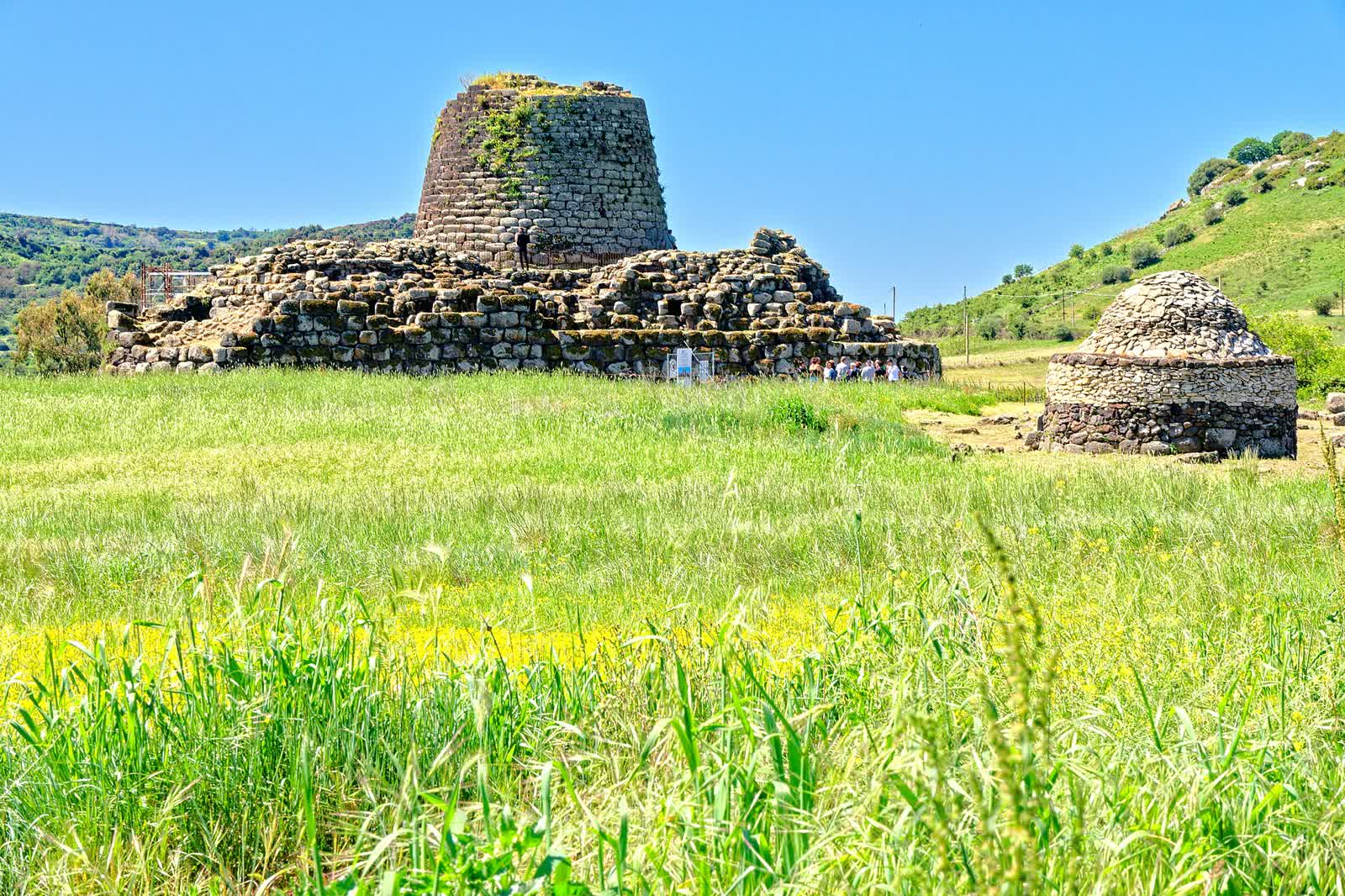
Before you route: three ground rules
- The towers are everywhere — the experience is not. Most of the 7,000 are field ruins without paths or signs. A handful — Su Nuraxi, Losa, Santu Antine, Santa Cristina, Tiscali — are excavated, maintained and visitable. Plan around those, and treat roadside nuraghi as bonuses.
- You need a car. These sites sit on rural roads beyond bus reach. Fly into Cagliari (CAG), Olbia (OLB) or Alghero (AHO), rent at the airport, and the island opens.
- Shoulder season wins. May–June and September–October give warm days, golden light and empty sites. July–August brings intense midday heat with almost zero shade at the towers.
The 3-day circuit: Marmilla essentials (from Cagliari)
The classic starter loop, ~60–70 km north of Cagliari across the grain plain called the Marmilla.
| Day | Plan |
|---|---|
| Day 1 | Land in Cagliari → Su Nuraxi di Barumini (guided tour + Antiquarium) → evening in Barumini or Sanluri. Half a day at Su Nuraxi is honest; it is the only UNESCO-inscribed nuraghe complex (1997) and the most complete story a tower can tell. |
| Day 2 | Loop the Marmilla: Nuraghe Santa Anastasia (free, walk-around) → Su Muru Mannu megalith → Genna 'e Cruxenta "giant's tomb" → back via Sanluri castle. |
| Day 3 | Cagliari itself: the archaeological museum's bronze votives — the tiny towers-within-towers that gave archaeologists the model for everything else — then the old quarter before you fly. |
The 5-day circuit: add the western giants (Cagliari → Oristano)
Extend northwest along SS131 and the island's two grandest towers come into range.
- Nuraghe Losa (Abbasanta): the most photographed triangular fortress — three bastions fused around a tower whose upper storeys still stand. Free to walk around; go at closing light.
- Santa Cristina (Paulilatino): not a tower but its necessary companion — a water-cult sanctuary with a steep stone staircase descending ~25 steps to a perfectly cut tholos chamber, aligned so that the equinox sunrise lights the doorway.
- Nuraghe Santu Antine (Torralba): the "Royal Nuraghe" of the Meilogu plain — among the tallest structures its builders ever raised (sources vary between roughly 20 and 25 m for its original height), with an interior spiral you can actually walk.
Base yourself: Oristano for the coast, or Bosa for a dinner town worth returning to.
The 7-day circuit: add the mountains and the north
Two days each way on the big island loop — this is where the novel was born.
- Supramonte / Orgosolo (2 days): the high-barbagie limestone world east of Nuoro. Orgosolo is the island's most storied — and most deliberately unwelcoming-looking — shepherd village; its murals have made it famous. Nearby, Nuraghe Tiscali sits inside a collapsed mountain doline: an entire village hidden in a crater, reached by a demanding early-morning hike. Bring water; there are no facilities.
- Gallura / north (2 days): from Olbia or Palau, the granite north holds dense clusters of small nuraghi above the Costa Smeralda — the towers most visitors never see because they never leave the beach.
What to book ahead
- Su Nuraxi timed guided entries — fine walk-up in shoulder season, book online in July–August and August bank-holiday weeks.
- Car — book early for summer; manual is cheaper, but the mountain roads reward an automatic if you can get one.
- Nothing else. Losa, Santa Cristina and the field monuments are walk-up sites. That is the point.
The novel layer (optional, honest)
If you want the trip with a plot: The Mystery of the Stone Tower (Book One of The Whisper of the Nuraghi) runs its fictional earthquake from the Marmilla to a buried tower near Orgosolo. The places are real; the 19.3 Hz frequency that "sings" under them is not — it is the novel's invented engine, built on real archaeoacoustics research. The free Archaeological Map marks every site above plus the novel's scenes, so you can read the fiction and stand in the fact.