TL;DR — Why This Book Exists
English-language thrillers set in Sardinia were virtually non-existent, and the Nuragic civilization — 7,000+ stone towers built across ~1,000 years by a people who left no written language — is the Mediterranean's greatest unsolved story gap. I wrote The Mystery of the Stone Tower to fill it, weaving real archaeoacoustic science into a six-series, thirty-book universe. In short: this is real history, told as a thriller.
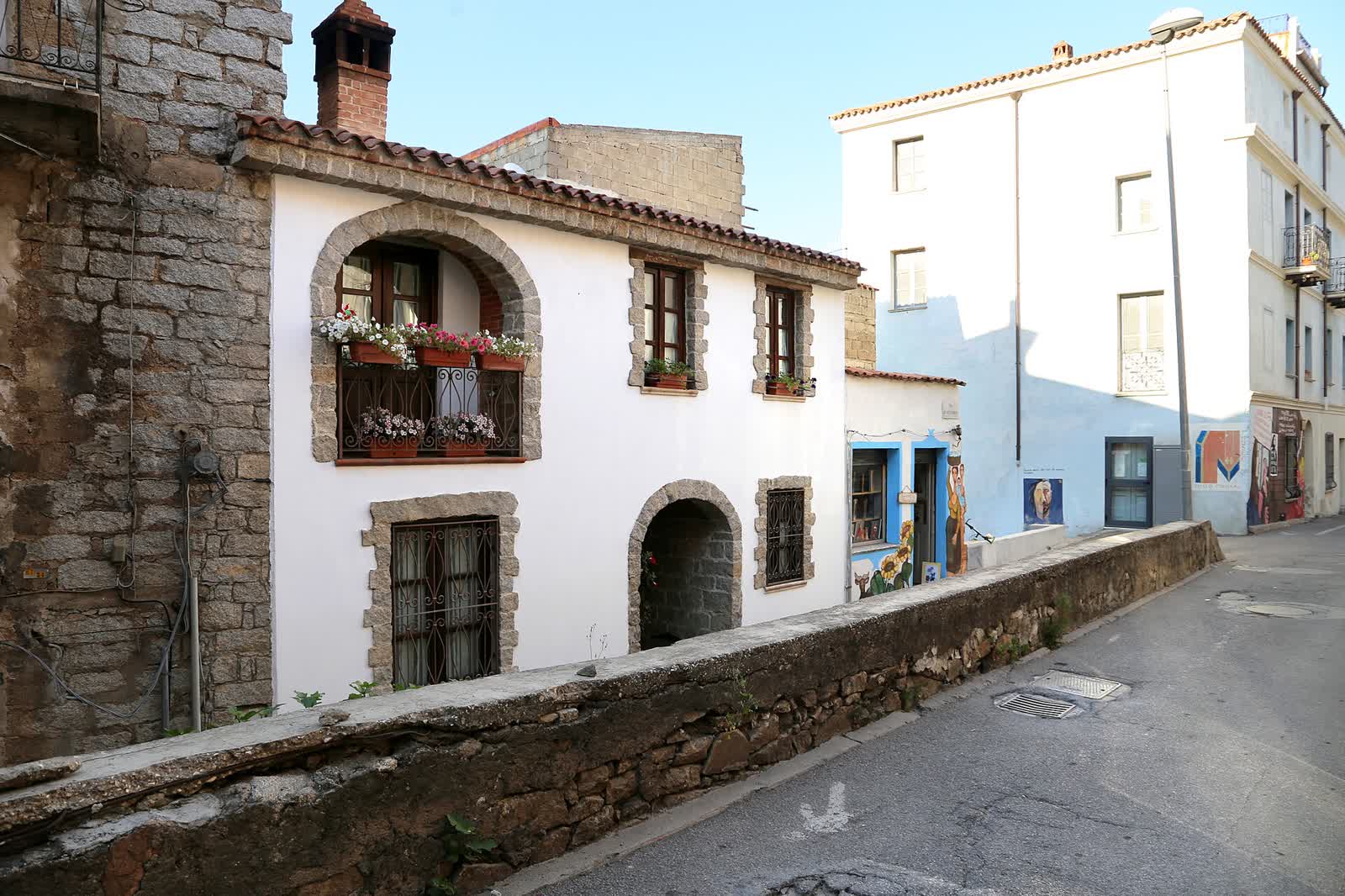
The seed of this story was planted on a dusty hillside in central Sardinia, under a sun so white it felt like the sky had been bleached. I was staring at a 3,500-year-old stone tower that should not exist — a Nuraghe, built by a civilization history has almost forgotten. And in the silence between those basalt stones, I heard something that would not let me go.
This is the story of how that silence became the MAREVA Capes series.
The Discovery That Changed Everything
Most people have never heard of the Nuragic civilization. And that is precisely the problem that The Mystery of the Stone Tower — and the entire MAREVA Capes series — is trying to solve.
Between 1800 BCE and 700 BCE, the Nuragic people built over 7,000 stone towers across Sardinia. These are not primitive cairns. The Nuraghe of Santu Antine rises three stories, with a central tholos chamber that rivals Mycenaean engineering. The Nuraghe of Arrubiu covers four acres. The giants' tombs — tombe dei giganti — stretch 30 meters, built with precision-cut orthostats that would challenge a modern stonemason.
And yet, when was the last time you read a novel set against this backdrop?
Quick Facts
7,000+ Nuraghe towers built across Sardinia between 1800–700 BCE
3 stories high — the tallest Nuraghe, Santu Antine, stood 25 meters
2,000 years before the Romans, the Nuragic people were building in stone
0 known literary works — the Nuragic language was never deciphered
The Silence in the Research
When I began researching this book, I expected to find dozens of archaeological thrillers set in Sardinia. The ingredients are irresistible: a lost civilization, unsolved mysteries, megalithic architecture, and an island that feels like a separate continent.
I found almost nothing.
English-language fiction set in Sardinia is virtually non-existent. The Nuragic civilization — one of the most sophisticated Bronze Age cultures in the Mediterranean — has been the subject of perhaps a handful of novels worldwide. The market gap is staggering. But more importantly, the story gap is astonishing.
Consider what we do not know about the Nuragic people:
- No written language survives — their records are stone, bronze, and silence
- No one knows why they built the Nuraghe — fortresses? temples? astronomical observatories? all of the above?
- Their bronze iconography — the enigmatic "Nuragic bronzetti" — shows warriors, ships, and creatures that suggest contact with the Eastern Mediterranean, long before the Phoenicians
- Their civilization collapsed around 700 BCE, leaving no explanation
"The Nuragic civilization is the Mediterranean's greatest unsolved mystery. We have the monuments, the artifacts, the bones — but the story is missing."
Every blank space in the historical record is a hook for fiction. And in the MAREVA Capes series, I have filled those blanks not with fantasy, but with something more unsettling: a plausible scientific explanation that has been hiding in plain sight.
The 19.3 Hz Frequency
This is not a spoiler — the science is woven into the fabric of every book.
In The Mystery of the Stone Tower, acoustic archaeologist Leo Marchi discovers that certain Nuraghe towers resonate at a specific frequency: 19.3 Hz. That frequency is the novel's engine — fiction. The acoustics behind it are not. The Maltese Hypogeum — a 5,000-year-old underground temple — has been reported to resonate near 110 Hz, within the range of the human voice. The Neolithic chambers at Newgrange in Ireland are aligned to the winter solstice. Ancient builders across the world understood acoustics and resonance in ways that we are only beginning to rediscover.
The seed of this book is a real, still-debated observation. In 2006, Italian seismologists — Latronico and colleagues, studying limestone near the ancient quarry of Gola su Gorropu — detected anomalous, rhythmical low-frequency signals that their instruments could not neatly explain. That is where the science ends and the novel begins. The specific 19.3 Hz frequency, and the idea of a tower built to "sing" at it, are my invention: a fictional engine grown deliberately out of real archaeoacoustics. In the book, Leo Marchi calls 19.3 Hz "the frequency the earth uses to whisper."
Whether you believe the science or not, the question is irresistible: What if the Nuragic people knew about it?
Why a Series, Not a Single Book
The MAREVA Capes universe is built on a simple structural insight: one mystery is not enough. The Nuragic civilization was not a single culture but a continuum that lasted over a thousand years. Their influence — if we follow the evidence — extends beyond Sardinia, beyond the Bronze Age, and into the present.
The six series within MAREVA Capes explore different angles of the same central mystery:
| Series | Focus |
|---|---|
| The Whisper of the Nuraghi (D) | The archaeological thriller that starts it all |
| Letters from the Cape (A) | A contemporary epistolary mystery |
| The Book of Wrecks (B) | Maritime archaeology and the Phoenician connection |
| The Voice of the Island (C) | Sardinian folk memory and oral tradition |
| The Blue Series (E) | The Mediterranean's hidden history |
| The Forgotten Series (F) | What the records chose to erase |
Thirty books in total. Five per series. Each book is a standalone mystery. Every series is a complete arc. But the connections between them — the cross-series clues, the recurring characters, the shared geography — create a reading experience that rewards depth.
What I Hope You Find in These Pages
I did not write The Mystery of the Stone Tower to teach archaeology. I wrote it because I believe that the best popular fiction does two things at once: it entertains, and it makes you curious about the world. A good thriller should keep you up at night. A great one should make you want to book a flight to Sardinia the next morning.
If you read the book and find yourself Googling "Nuraghe pronunciation" at 2 AM — I have done my job.
If you finish the last chapter and wonder whether the 19.3 Hz frequency is real — open the 19.3 Hz simulator on this site and listen for yourself. The sound file is free. The physics of resonance is real; the 19.3 Hz tone is fiction. What you make of it is your own mystery.
And if you want the next book before anyone else, join the MAREVA newsletter. Subscribers get the first chapter of Book 2 before anyone else, exclusive research notes, and the occasional archaeological rabbit hole that didn't make it into the final draft.
The stones are speaking. All we have to do is listen.
FAQ — About the Book
Why did the author write The Mystery of the Stone Tower?
Because there were almost no English-language thrillers set against Sardinia's Nuragic civilization — one of the most sophisticated Bronze Age cultures in the Mediterranean and its greatest unsolved mystery — and the author wanted to fill that story gap.
Is the 19.3 Hz frequency real?
The physics of resonance is real. Archaeoacoustic work has measured natural frequencies inside megalithic chamber structures such as the Maltese Hypogeum. The specific 19.3 Hz narrative device in the novel is fiction built on this real science.
How many books are in the MAREVA Capes series?
Thirty books across six series, five books per series. Each book is a standalone mystery, each series a complete arc, with cross-series clues and shared geography rewarding deep reading.
What is the Nuragic civilization?
The Bronze Age people of Sardinia (~1800–700 BCE) who built 7,000+ stone towers, giants' tombs and sacred wells, and who left no written language — their story is written in stone and bronze.
Sources & Further Reading
- Archaeoacoustic studies of the Hal Saflieni Hypogeum (Malta), documented chamber resonance near 110 Hz.
- Alignment and acoustics research at Newgrange (Ireland), referenced in the book's research notes.
- Schumann Resonance theory (W.O. Schumann, 1952) and reported harmonics, cited in the novel's scientific framing.
- Nuragic archaeology scholarship (Giovanni Lilliu) and Sardinian regional site documentation.