TL;DR — What You Need to Know to Visit a Nuraghe
Most Nuraghe towers are free, open and walkable with no fences or queues. The two excavated "must-see" sites — Su Nuraxi di Barumini and Nuraghe Losa — charge a low entry fee (€5–15) and Su Nuraxi requires a guided tour. Rent a car, go in April–June or September–October, and bring sturdy shoes, water and a torch. Plan half a day for one site, a full day for two, and a week to see the island's best spread across all regions.
"Seven thousand towers scattered across the island like the bones of a forgotten civilization. And almost every one of them is free to visit."
Sardinia's Nuraghe towers are among the most accessible ancient monuments in the world. Unlike the carefully guarded ruins of Egypt or the ticketed queues of the Acropolis, most nuraghi sit open to the sky, unfenced, unwatched, waiting for anyone who cares to walk inside. This guide covers the essential sites, how to reach them, and what to expect when you arrive.
In Short / Key Takeaway
Sardinia holds roughly 7,000 Bronze Age Nuragic towers — the highest density of ancient stone monuments in Europe. In short: visit during the shoulder seasons, hire a car, and prioritise Su Nuraxi (UNESCO), Santa Cristina (sacred well), Santu Antine (grandeur) and Tiscali (hidden village). Most are free, open and directly walkable — a rare chance to touch 3,500-year-old stone yourself.
Before You Go
When to visit: The best months are April through June and September through October. The weather is mild, the crowds are thin, and the light is golden. July and August are intensely hot — most sites have zero shade, and the midday sun makes exploration uncomfortable. If you visit in summer, go early morning or late afternoon.
Getting around: You need a car. Public transport in inland Sardinia is extremely limited, and most Nuraghe sites are in remote rural areas. The roads are generally good, but many sites require a short drive on unpaved roads. A standard rental car is sufficient.
What to bring: Sturdy walking shoes (terrain is uneven and rocky), sun protection (hat, sunscreen, sunglasses), water (many sites have no facilities), and a torch/flashlight (the internal chambers are dark). Download offline maps — mobile signal drops frequently in the interior.
The Five Must-See Sites — At a Glance
| Site | Region | Entry | Best for |
|---|---|---|---|
| Su Nuraxi di Barumini | South (Cagliari) | €12–15, guided | First-timers, families |
| Nuraghe Losa | Central (Oristano) | Low fee | Architecture, construction |
| Santu Antine | North (Torralba) | Low fee | Scale, grandeur |
| Santa Cristina Well | Central (Paulilatino) | Low fee | Astronomy, acoustics |
| Tiscali Village | Supramonte (Nuoro) | Free (hike) | Hikers, adventure |
The Five Must-See Sites
1. Su Nuraxi di Barumini
Region: South Sardinia (45 km north of Cagliari)
UNESCO: Yes (1997, No. 833)
Entry: ~€12–15, guided tour required (30 min intervals, ~1 hour)
Best for: First-time visitors, families, understanding what a Nuraghe is
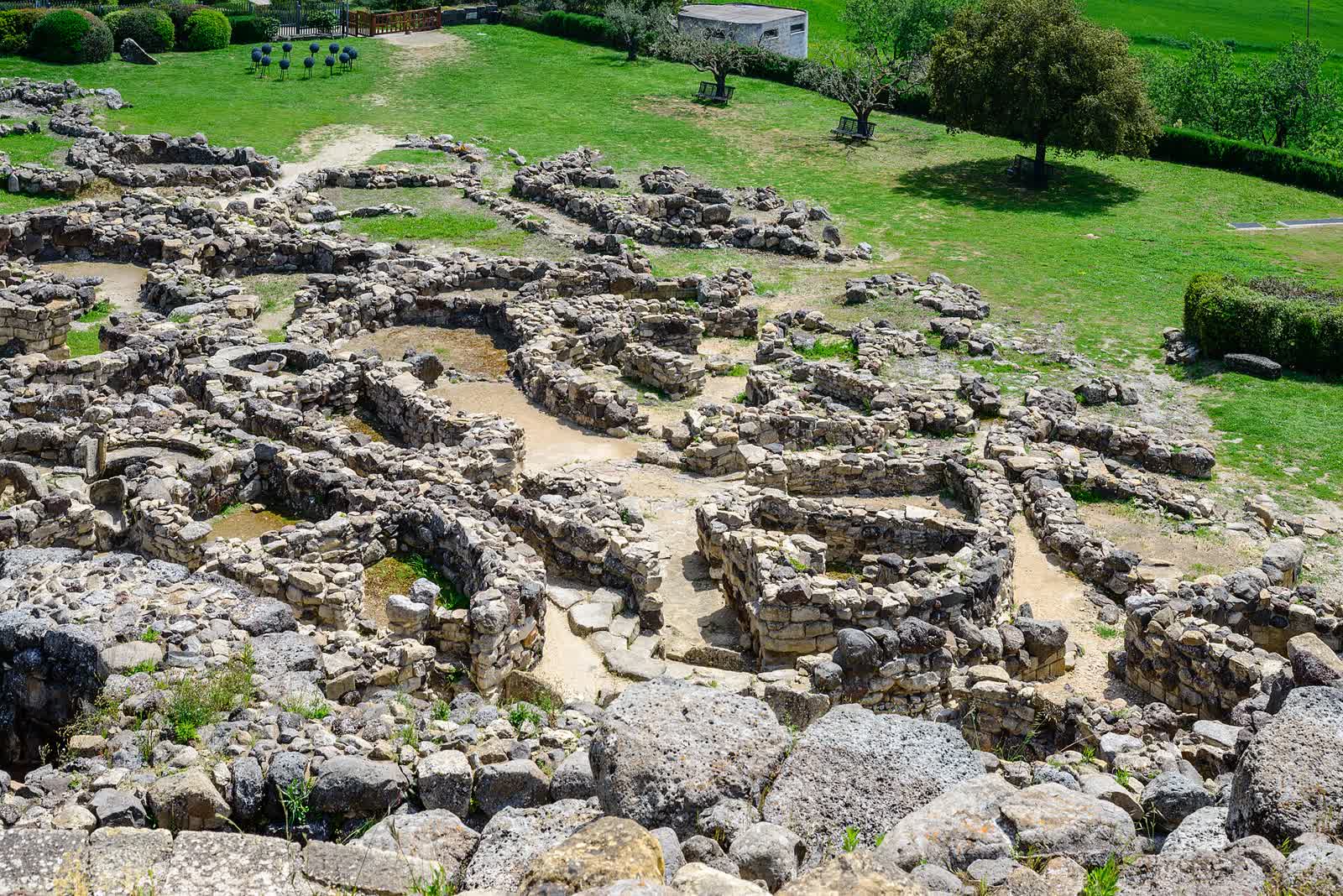
The most important and best-preserved Nuragic complex on the island. The central tower originally stood 18.5 metres high, surrounded by a four-lobed bastion and a sprawling village of circular huts. Excavated between 1951 and 1956 by Giovanni Lilliu, Su Nuraxi is the site that defined Nuragic archaeology. The guided tour is mandatory and excellent — your guide will explain the construction techniques, the history of the excavation, and the ongoing debates about the towers' purpose. Allow 1.5–2 hours.
2. Nuraghe Losa
Region: Central Sardinia (Abbasanta, near Oristano)
Entry: Low fee, guided tour available
Best for: Architecture enthusiasts, understanding Nuragic construction
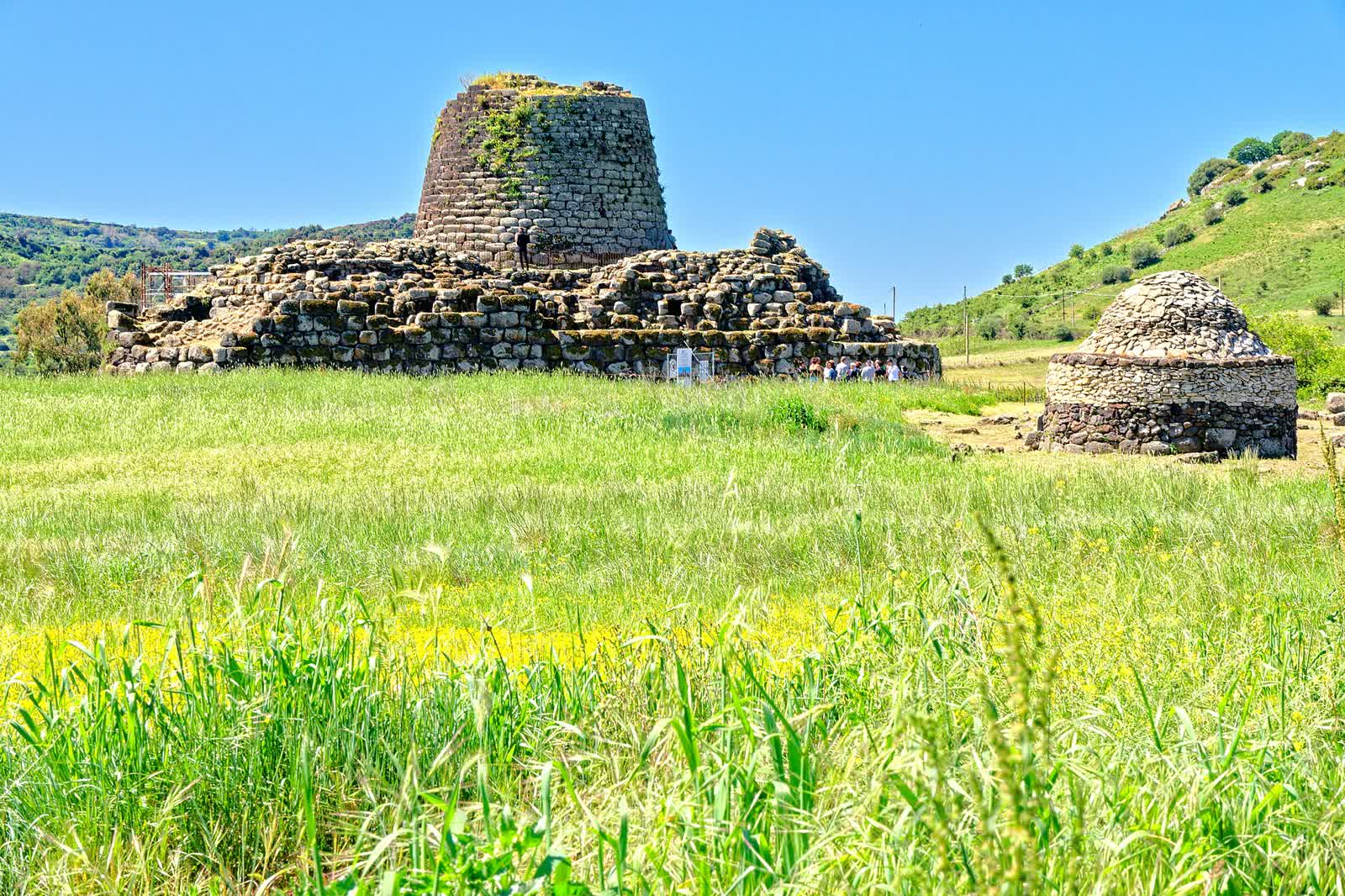
The purest architectural form of any Nuraghe. A triangular outer wall encloses a three-lobed central tower — the main truncated cone stands approximately 13 metres high, flanked by two side towers connected by a curved curtain wall. Built around the 15th–14th centuries BCE. The site is compact and easy to navigate, making it an excellent stop for a quick visit. The interior chambers are accessible — bring your torch.
3. Santu Antine — "Sa Domu de su Re"
Region: Northern Sardinia (Torralba, Meilogu region)
Entry: Low fee
Best for: Advanced visitors, scale, grandeur
Known as "sa Domu de su Re" (the King's House), this is the most majestic Nuraghe in Sardinia — an equilateral triangular plan with three towers, originally rising to three storeys of corbelled tholos chambers. In use from the 16th to the 9th centuries BCE. The scale is breathtaking: you can walk through chambers that have been standing for 3,500 years and feel the acoustics that the novel describes. The surrounding countryside is beautiful — allow time to walk around the exterior.
4. Santa Cristina Sacred Well
Region: Central Sardinia (Paulilatino, near Oristano)
Entry: Low fee
Best for: Astronomy, photography, spiritual atmosphere
A water-cult sanctuary, not a tower — but archaeologically essential. A perfectly preserved staircase of approximately 25 steps descends to a corbelled tholos chamber over a still-active spring. The well's alignment to the equinox sunrise is a subject of ongoing research. The acoustics are extraordinary: stand at the bottom of the staircase and speak — your voice will be amplified and projected upward with a clarity that seems impossible for a 3,000-year-old structure. Late Bronze Age, ~1000 BCE.
5. Nuraghe Tiscali
Region: Supramonte (Dorgali–Oliena, Province of Nuoro)
Access: 1.5–2 hour hike each way. Guide recommended.
Best for: Hikers, adventure travellers, those who want to earn their archaeology
The most extraordinary setting on the island. A collapsed limestone cave (dolina) created a natural amphitheatre, inside which an entire Nuragic village was built — approximately 40 circular huts on the north side, 30 smaller rectangular foundations on the south. Completely hidden from the outside world until the 20th century. The hike is challenging but rewarding — the trail ascends through Mediterranean scrub, past limestone cliffs, with views that stretch across the Supramonte to the sea. No facilities at the site. Start early, bring water, and hire a local guide.
🗺 Free Archaeological Map
Download our comprehensive Archaeological Map of Sardinia — a guide to 20+ Nuragic sites with detailed itineraries, visit tips, and historical context. Perfect for planning your trip.
Sample Itineraries
One-Day Express (Self-Drive)
- Route: Oristano → Santa Cristina (morning) → Nuraghe Losa (midday) → Su Nuraxi (afternoon, last tour ~4 PM)
- Distance: ~120 km total
- Best for: a quick but comprehensive introduction
Two-Day Deep Dive
- Day 1: Su Nuraxi (morning) → Nuraghe Arrubiu (afternoon) → overnight in Cagliari or Orroli
- Day 2: Santu Antine (morning) → Tiscali hike (afternoon, start by 2 PM)
- Distance: ~250 km over two days · Best for: archaeology enthusiasts, photography
One-Week Island Tour
- Pair the Nuraghe sites with the Costa Smeralda beaches, the Maddalena Archipelago, the Gennargentu mountains, the Phoenician site of Nora, and the Nuragic museum in Cagliari.
- Nuraghe sites are spread across every region, so you can tick them off as you travel around the island.
Practical Tips
- Entry fees are low. Most sites charge €5–15. Cash is still preferred at smaller sites.
- No shade. Most sites are exposed. The sun in Sardinia is intense even in spring and autumn.
- No facilities. Many sites have no toilets, no water, and no food. Plan accordingly.
- Photography is allowed. Tripods may require permission at larger sites.
- Touch the stones. Unlike many heritage sites, most nuraghi allow you to walk inside and touch the walls. The stone is cold, rough — and silent. The hum you may imagine is where my novel takes over.
- Read the novel first. Nothing prepares you for standing inside a 3,500-year-old tower, running your hand along a corbelled wall, and remembering that the protagonist of The Mystery of the Stone Tower did the same thing — and heard something no one else could hear.
FAQ — Visiting the Nuraghe Towers
Are the Nuraghe towers free to visit?
Most nuraghi are open, unfenced and free to enter. The major excavated sites charge a fee — Su Nuraxi di Barumini costs about €12–15 and requires a mandatory guided tour, while smaller sites (Nuraghe Losa, Santu Antine) charge a low entry fee.
When is the best time to visit the nuraghi in Sardinia?
April through June and September through October are ideal: mild weather, thin crowds and golden light. July and August are intensely hot and most sites have no shade.
Do you need a car to visit the Nuraghe towers?
Yes. Public transport in inland Sardinia is extremely limited and most Nuragic sites are in remote rural areas, so a rental car is strongly recommended.
Which Nuraghe is a UNESCO World Heritage site?
Su Nuraxi di Barumini, excavated by Giovanni Lilliu between 1951 and 1956, was inscribed as a UNESCO World Heritage site in 1997 (site number 833).
Can you walk inside a Nuraghe tower?
Yes. Unlike many heritage sites, most nuraghi allow you to walk inside, climb the internal chambers and touch the walls — the interior corridors are dark, so bring a torch.
Sources & Further Reading
- UNESCO World Heritage Centre — "Su Nuraxi di Barumini" (Inscription 833, 1997). Accessed via UNESCO's official site description.
- Giovanni Lilliu, excavation reports on Su Nuraxi (1951–1956), as summarised in Sardinian archaeology literature.
- Official Sardinia tourism documentation on Nuragic sites (Santu Antine, Santa Cristina, Tiscali) and access/pricing.
- Archaeoacoustic research into Nuragic chamber resonance, referenced in the MAREVA series research notes.
Start with the Story
Read the first three chapters of The Mystery of the Stone Tower — free. Then visit Sardinia and see for yourself.
Read Free Sample